
Introduction to Kermanshah Refinery
Kermanshah Oil Refining Company, as one of the oldest refineries in Iran, began its operations in 1922 with a daily capacity of 2,000 barrels and gradually expanded. The crude oil feed for this refinery is supplied from the Naft Shahr, Serkan, and Maleh-Kouh oil fields. The company’s produced products include liquefied petroleum gas (LPG), normal butane, gasoline, kerosene, gas oil, and fuel oil. In the following, we will analyze and examine the parameters of the normal butane gas analysis of Kermanshah Oil Refining Company.
Analysis of Normal Butane Gas Parameters of Kermanshah Oil Refining Company
Hydrocarbons
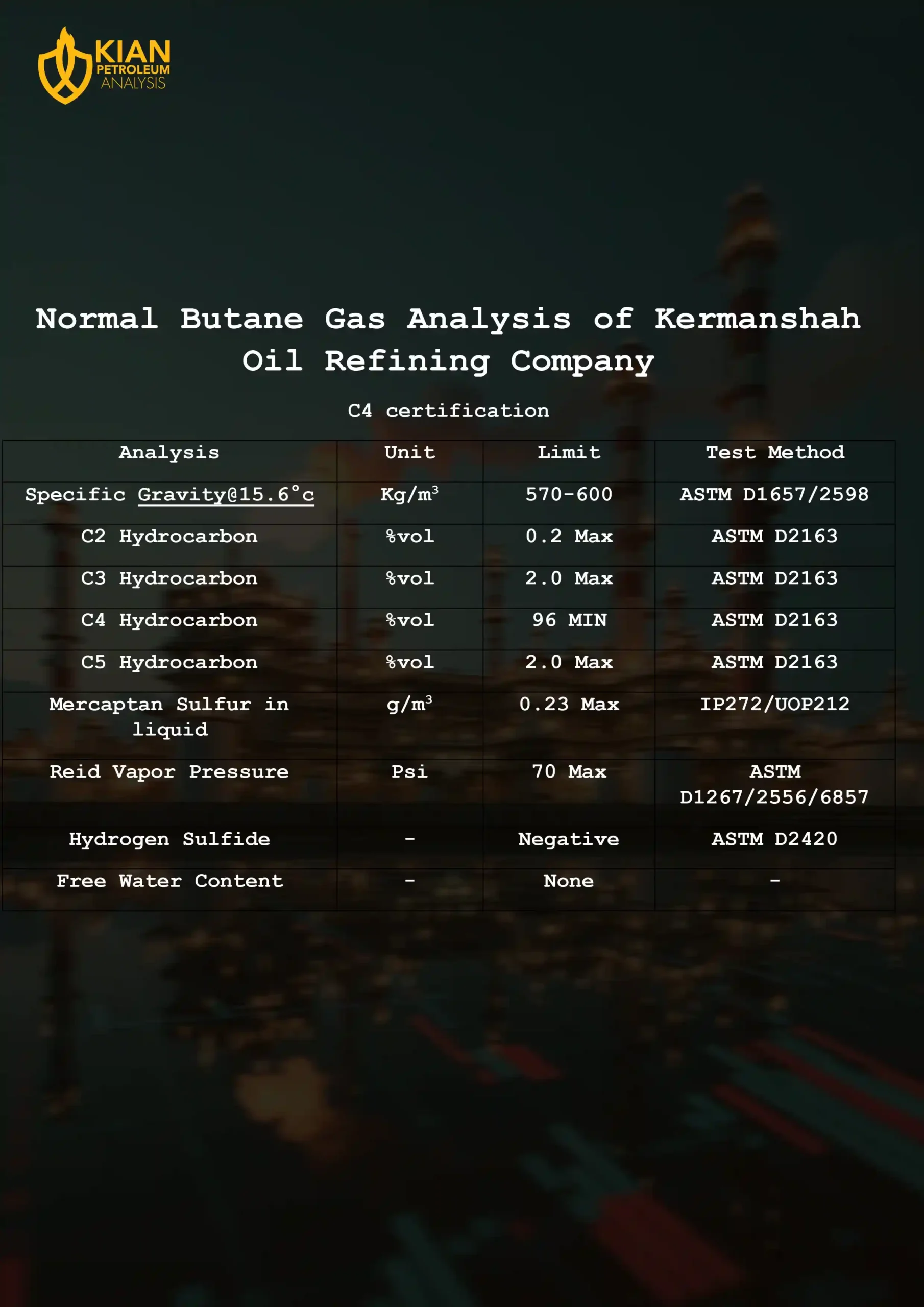
According to the analysis of normal butane gas from Kermanshah Oil Refining Company, the main component of this product is C4 hydrocarbon, which is determined to be at least 96% by volume (96 MIN). This value indicates that the product has a high purity of normal butane, which is crucial for use in the petrochemical and fuel industries. Other hydrocarbons present include C2 (ethane) with a maximum of 0.2% by volume, C3 (propane) with a maximum of 2% by volume, and C5 (pentane) with a maximum of 2% by volume. These compounds are present as controlled impurities in the product.
Mercaptan Sulfur
Mercaptan sulfur is an organic sulfur-containing compound with an unpleasant odor, which must be minimized in fuels. The maximum allowable limit for it is 0.23 g/m³. If the sample’s value is below this limit, it indicates good quality and compliance with environmental and industrial standards. Higher amounts can cause problems such as corrosion or undesirable odor.
Reid Vapor Pressure (RVP)
Reid Vapor Pressure (RVP) is one of the key indicators in measuring the volatility of a hydrocarbon liquid and represents the vapor pressure that a liquid generates at 37.8°C. This parameter is measured in pounds per square inch (Psi) and has a direct impact on the storage properties, transportation, and safety of the product. According to the analysis report of Kermanshah Oil Refining Company, the maximum acceptable limit for normal butane is 70 Psi, indicating a standard level of vapor pressure control in this product. Adhering to this range is crucial, as excessive vapor pressure can lead to hazards such as increased flammability, rapid evaporation, and instability during storage, posing risks to the safety of transportation and usage processes.
Hydrogen Sulfide
Hydrogen sulfide (H₂S) is a highly toxic and corrosive compound that can have severe effects on human health and the environment, even in small concentrations. At high concentrations, it can cause respiratory issues, nervous system damage, and even death. In addition to health hazards, the high corrosiveness of hydrogen sulfide gradually degrades metallic equipment in pipelines and storage tanks, leading to increased maintenance and repair costs. According to the analysis report from Kermanshah Oil Refining Company, the hydrogen sulfide content in the company’s normal butane gas has been reported as Negative, indicating that the supplied product is completely free of H₂S and possesses excellent safety and quality standards.