
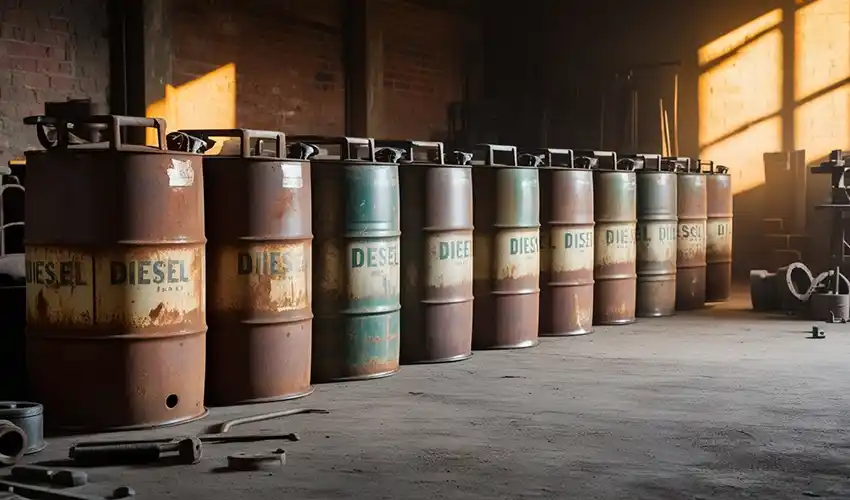
Diesel fuel is a liquid fossil fuel composed of relatively heavy hydrocarbons and is also referred to as diesel fuel. This fuel is usually produced through the fractional distillation of crude oil and is widely used in diesel engines. In this article, we will thoroughly examine diesel fuel, discussing its properties, applications, and potential hazards.
It should be noted that Kian Petroleum Company does not provide any services related to the supply or transportation of diesel fuel, and this scientific article is prepared solely to familiarize readers with this widely used product.
Nature of Diesel Fuel: What is Diesel Fuel Made of?
Diesel fuel is a liquid fossil fuel with a hydrocarbon-based composition, produced through the middle distillation of crude oil in refineries. This fuel primarily consists of hydrocarbons with carbon chains ranging from 12 to 20 carbon atoms. Its main components include alkanes (paraffins), which provide stable combustion and high energy output, aromatics, which enhance energy density, and small amounts of olefins as volatile compounds. The exact composition of diesel fuel varies depending on the region and local standards and is often enhanced with additives to improve cetane number, reduce emissions, and increase resistance to low temperatures.
Characteristics of Diesel Fuel
Diesel fuel is a liquid fuel with a clear to light yellow color and a distinctive smell. However, its color can vary due to various factors such as the refining process, local standards, and additives used. Diesel fuel is generally clear to pale yellow, but in some regions, it may have different colors due to the addition of dyes or specific characteristics.
The flash point of diesel fuel is usually between 52 to 96 degrees Celsius, which is significantly higher than gasoline (approximately -40 degrees Celsius). This characteristic makes diesel fuel safer than gasoline, as it requires a higher temperature to ignite and does not vaporize easily under normal environmental conditions.
Additionally, diesel fuel has a high calorific value and energy density, making it a powerful source for energy production. Its boiling point ranges between 200 and 360 degrees Celsius, placing it in the middle distillation range. Other important features of diesel fuel include its high cetane number (indicating better ignition quality and performance in diesel engines), suitable viscosity for lubricating engine components, and low sulfur content (in low-sulfur diesel fuels).
For more detailed information about the properties of this product, you can refer to the article on diesel fuel analysis.
Diesel Fuel Production Stages
Stage 1: Initial Distillation of Crude Oil
In the first stage of diesel fuel production, crude oil is introduced into a distillation tower and subjected to heat. This tower is divided into various sections, each designed to separate materials at different temperatures. Diesel fuel, as one of the intermediate products, vaporizes at a temperature range of 250 to 350 degrees Celsius and is separated from lighter and heavier fractions. This process enables the initial separation of various components present in crude oil.
Stage 2: Desulfurization and Refinement
After the initial distillation, raw diesel contains high levels of sulfur and impurities, making it unsuitable for direct use. It undergoes a desulfurization process where sulfur compounds are removed using hydrogen and a catalyst. This stage not only reduces environmental pollution but also improves the quality of diesel fuel, making it more suitable for use in diesel engines.
Stage 3: Quality Improvement and Additives
In the final stage, the refined diesel fuel undergoes rigorous testing to ensure properties such as density, viscosity, and cetane number meet the required standards. To enhance fuel performance, additives like anti-foam agents, anti-freeze compounds, and cetane improvers are added. After this stage, the produced diesel fuel is ready for storage in tanks or distribution to the market.
Applications of Diesel Fuel
Transportation
Diesel fuel plays a crucial role in transportation. Due to its high energy density and efficiency, it is widely used in heavy vehicles such as trucks and buses. Additionally, many diesel-powered trains in rail transport and small ships in marine transport rely on diesel fuel. These vehicles, equipped with diesel engines, are capable of carrying heavy loads and traveling long distances.
Agriculture
In agriculture, diesel fuel serves as the primary energy source for heavy machinery and equipment. Tractors, combines, and other agricultural machinery typically operate with diesel engines. These diesel-powered machines have significantly assisted farmers in plowing, planting, and harvesting crops.
Power Plants and Generators
Diesel fuel is an essential energy source in industries for operating machinery and various equipment. Many factories and industrial facilities use diesel fuel to power diesel engines, generators, and production equipment. Furthermore, in industries requiring backup electricity, such as refineries, mines, and manufacturing plants, diesel generators provide the necessary power.
Construction
Diesel fuel plays a vital role in construction and civil engineering projects, serving as the primary fuel for heavy machinery such as excavators, loaders, bulldozers, cranes, and trucks used for transporting materials. These machines, requiring high power and efficiency under tough conditions, are powered by diesel engines that run on diesel fuel.
Heating
Diesel fuel is an effective source of heating for buildings and industries, especially in areas where access to natural gas is limited. In heating systems, diesel is used as the primary fuel for boilers and steam generators, providing the heat needed to warm spaces or produce steam. This fuel is a popular choice in rural homes, commercial buildings, and certain industrial facilities.
Diesel Combustion in Diesel Engines
The working process of a diesel engine is entirely different from that of a gasoline engine. In a diesel engine, unlike a gasoline engine where the fuel burns simultaneously as it is sprayed into the cylinder, there is a slight delay between fuel injection and the start of combustion, known as the ignition delay period. This delay depends on the type of fuel, engine design, and combustion conditions.
In a diesel engine, during the first stage, pure air is drawn into the cylinder. In the second stage, this air is compressed, causing its temperature to rise significantly. Following this, the fuel is injected into the cylinder. When the temperature and pressure reach the required level, the fuel ignites automatically without the need for a spark plug. In the third stage, the gases produced by combustion expand the cylinder, generating energy. Finally, in the fourth stage, the exhaust gases are expelled from the cylinder through the exhaust system.
For this reason, the chemical composition of diesel fuel and the conditions within the diesel engine must be designed to facilitate the automatic combustion of the fuel under high temperature and pressure.
Diesel Fuel and the Environment
Diesel fuel, as one of the fossil fuels, has significant environmental impacts and plays a major role in air pollution. Its combustion in diesel engines results in the emission of pollutants such as carbon dioxide (CO₂), nitrogen oxides (NOx), and particulate matter (PM). These pollutants not only contribute to greenhouse gases and global warming but also have detrimental effects on air quality, human health, and natural ecosystems. In particular, particulate matter produced by diesel can cause respiratory and cardiovascular diseases. Additionally, the sulfur content in diesel fuel can lead to acid rain, which damages soil, water bodies, and vegetation. Although new standards and technologies, such as diesel particulate filters (DPF) and ultra-low sulfur diesel (ULSD), have mitigated these effects to some extent, the widespread use of diesel fuel remains a significant challenge for the environment.
Diesel Fuel Stations

Diesel fuel stations are usually located on the outskirts of cities, along intercity roads, and in industrial areas. These locations are chosen to provide easier access for heavy vehicles such as trucks, buses, and industrial machinery, as these vehicles often operate on long routes and busy highways. Placing these stations in such areas also helps reduce traffic within cities and facilitates the refueling process for heavy vehicles, which require more space for stopping. Additionally, situating them on city outskirts is important for safety and for reducing noise and environmental pollution.
Final Remarks
Diesel fuel, as one of the most widely used fossil fuels, plays a crucial role in various industries, transportation, agriculture, and construction. This liquid fuel, composed of heavy hydrocarbons, has become an essential source of energy for industrial activities and energy production due to its high calorific value, suitable energy density, and capability to perform under challenging conditions. However, diesel fuel negatively impacts the environment and human health by producing pollutants such as carbon dioxide, nitrogen oxides, and particulate matter. Additionally, diesel fuel stations are typically located on city outskirts and highways to minimize noise and environmental pollution while facilitating the refueling process for heavy vehicles.