
تاریخ بروزرسانی(Update Date): 18th July 2026
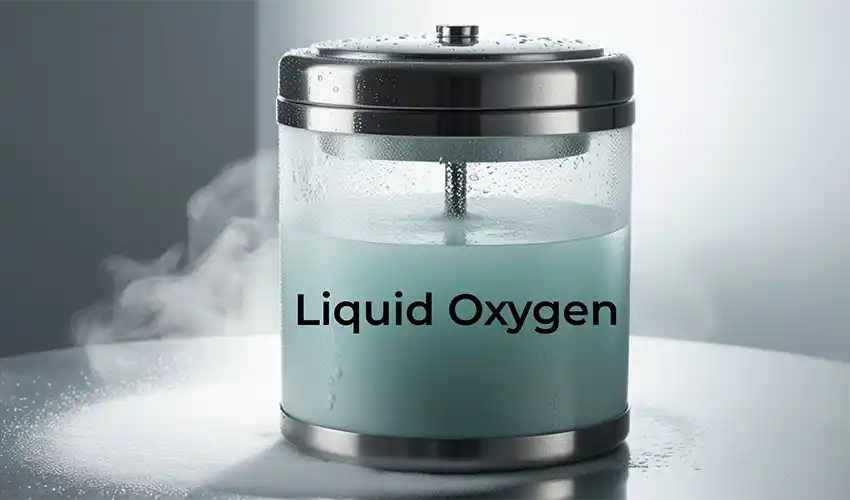
Liquid oxygen is an extremely cold, pale blue liquid obtained by liquefying oxygen gas at a very low temperature (around -183°C). Oxygen gas is one of the essential components of Earth’s atmosphere, and the survival of most living organisms depends on it. This gas constitutes about 20% of the air’s volume and is primarily produced through the process of photosynthesis in plants. In some industrial processes, oxygen is liquefied. Below, we explore liquid oxygen from various perspectives:
Why is oxygen gas liquefied?
- Easier transportation: Liquid oxygen occupies much less volume compared to gaseous oxygen, making it easier and more cost-effective to transport.
- Reduced risk of leakage: Gaseous substances pose a higher risk of leakage, and converting them to the liquid phase is one way to minimize this risk.
- Enhanced reactivity: Liquid oxygen has a higher density than gaseous oxygen, enabling it to combine more easily with other elements. In some industries, oxygen gas is first liquefied before being used.
Production of Liquid Oxygen
One of the most common methods for producing liquid oxygen is the distillation of liquid air. This process involves the following steps:
- Air Compression: Initially, air is compressed using compressors. This compression increases the air’s temperature.
- Air Cooling: After compression, the air is cooled to a very low temperature, approximately -190°C, to liquefy it.
- Distillation and Gas Separation: The liquid air is introduced into distillation columns, where the temperature is gradually increased to separate gases based on their boiling points.
- Liquid Oxygen Collection: At this stage, oxygen, with a boiling point of -183°C, is separated from other gases and collected in liquid form.
Storage of Liquid Oxygen
Due to its extremely low temperature (approximately -183°C) and high evaporation rate, liquid oxygen requires specific conditions for storage. It is typically stored in specialized tanks known as cryogenic tanks, which are made of stainless steel or aluminum. These tanks have double walls with strong thermal insulation to prevent heat transfer and minimize oxygen evaporation. The space between the tank walls is usually a vacuum or filled with insulating materials such as perlite. These tanks are also equipped with safety systems like relief valves to prevent pressure buildup caused by the evaporation of liquid oxygen.
Applications of Liquid Oxygen
Petrochemical Industry
In the petrochemical industry, liquid oxygen is used in gasification and advanced combustion processes. In gasification, liquid oxygen is utilized to produce combustible gases such as hydrogen, CO, and methane. Advanced combustion means using pure oxygen instead of air for burning, which increases combustion efficiency.
Medical Field
Oxygen gas is essential for the human body, carried by hemoglobin in the blood to various cells for aerobic respiration. In hospitals and healthcare centers, liquid oxygen cylinders are used to produce high-purity oxygen gas for respiratory patients, especially those requiring artificial ventilation.
Aerospace and Rocket Launching
Liquid oxygen is used as a powerful oxidizing agent in rocket fuels in the aerospace industry. In rockets, liquid oxygen is converted to gas. The resulting pure oxygen gas combines with liquid hydrogen or kerosene (a mixture of various hydrocarbons), releasing significant energy that propels the rocket into space.
Laboratories
Liquid oxygen has diverse applications in laboratory and biological research due to its extremely low temperature and strong oxidizing properties. In laboratories, it is used to simulate cryogenic conditions (very low temperatures) and study the behavior of materials under these conditions. In biological research, liquid oxygen is used for preserving biological samples like cells, tissues, and sperm in a frozen state. This method helps maintain biological characteristics and prevents damage caused by cellular degradation.
Water and Wastewater Treatment
Liquid oxygen is also used for treating water and wastewater to remove pollutants. Initially, liquid oxygen is converted into gaseous oxygen, which enhances the activity of beneficial bacteria in wastewater. These bacteria then break down organic matter and pollutants, ultimately purifying contaminated water. Due to the high purity of liquid oxygen, this method is far more efficient than conventional aeration and is used for treating industrial and municipal wastewater.
Safety Precautions
- When working with liquid oxygen, wearing protective clothing, thermal-insulated gloves, and safety goggles is essential to prevent burns caused by low temperatures.
- Liquid oxygen reacts strongly with flammable materials such as oil, grease, and isobutane, significantly increasing the risk of explosion or fire.
- As liquid oxygen evaporates into gaseous oxygen, work environments should be well-ventilated to prevent oxygen gas accumulation.
- The maximum ambient temperature for storing pressurized oxygen cylinders is 52°C.
- Avoid direct contact with liquid oxygen, as it can cause cryogenic burns.
- If liquid oxygen comes into contact with the skin, immediately rinse the affected area with warm (not hot) water and avoid rubbing or pressing on it.
- Liquid oxygen can cause severe eye and skin injuries.
Final Remarks
Liquid oxygen is an extremely cold liquid with a pale blue color that, due to its unique properties, finds applications in many critical industries and fields. One of the most common methods for producing this substance is the fractional distillation of liquid air. In this process, air is cooled to extremely low temperatures, and the gases within it are separated based on their boiling points.
Despite its wide range of applications, handling liquid oxygen requires strict adherence to safety precautions. Due to its very low temperature (approximately -183°C), direct contact with liquid oxygen or its vapors can cause severe frostbite or skin injuries. Additionally, while liquid oxygen itself is not flammable, it can make other materials highly flammable. For this reason, it should always be handled in a safe environment, away from combustible materials.